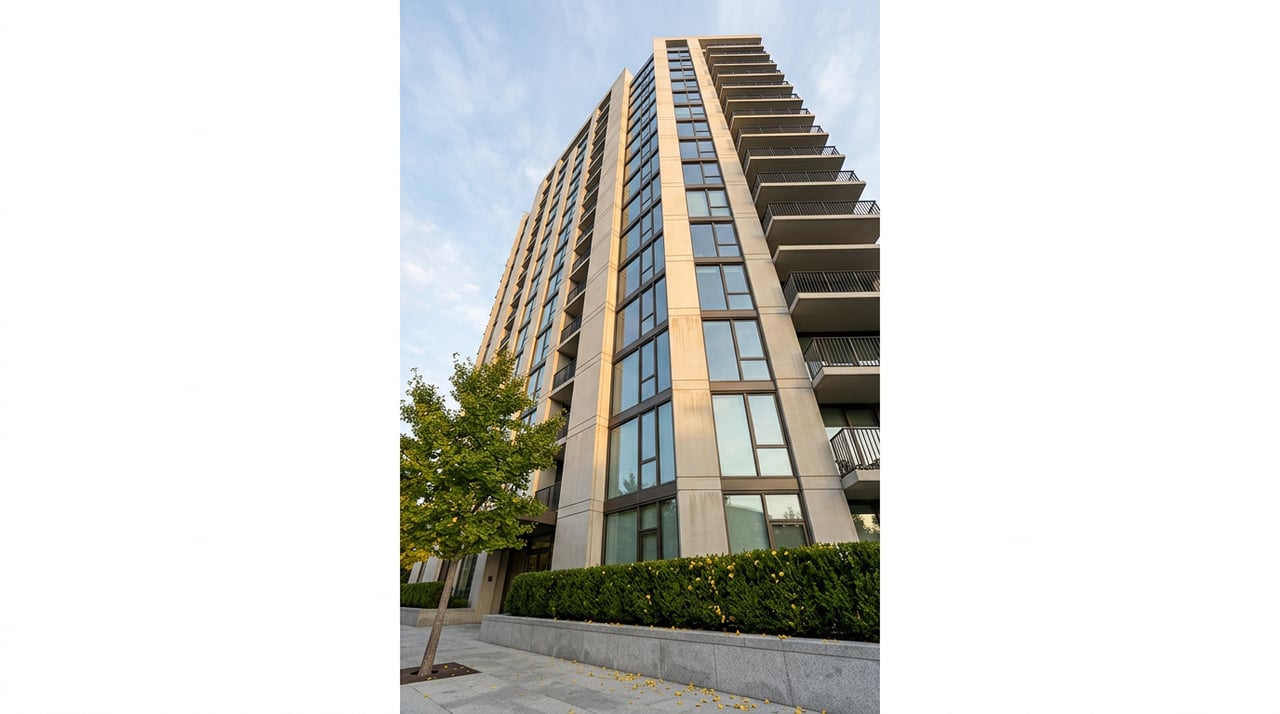
In Streeterville, Your Condo Loan Now Depends on the Building's Paperwork, Too
September 10, 2026
September 10, 2026
Scroll through current listings in a few of Streeterville's older towers and you will notice something new creeping into the description box. Where agents used to lead with view corridors and countertop finishes, some are now opening with a line about the association's reserve balance. One listing currently on the market in a 48-story building on East Ontario Street tells buyers, plainly, that the association holds more than three million dollars in reserves with no special assessments pending. A few years ago that sentence would have been buried in the disclosure packet. Today it is doing the work a granite countertop used to do.
That shift is not cosmetic. It reflects a real change in how conventional financing works in Chicago's high-rise condo stock, and it landed with almost no warning to the average buyer.
On August 3, 2026, Fannie Mae retired its Limited Review process and Freddie Mac retired its comparable Streamlined Review for conventional condo loans. Those shortcuts had let lenders approve loans in established condo projects without digging deep into the association's finances. Buyers filled out their paperwork, the building's track record spoke for itself, and the loan moved.
That shortcut is largely gone. Established projects that once qualified for the abbreviated reviews will generally need a full project review now, unless they qualify for a specific exemption or waiver. Fannie Mae has said the change reflects a pattern it has observed between underfunded condo reserves and buildings that end up needing critical repairs, and the stated goal is to reduce the odds of owners getting hit with a surprise assessment or a spike in monthly dues because the building never set enough money aside.
Here is what that looks like in practice for a buyer applying for a conventional loan in a Streeterville high-rise today.
| Before August 3, 2026 | Now | |
|---|---|---|
| Review path | Established projects often qualified for Limited Review (Fannie Mae) or Streamlined Review (Freddie Mac) | Most established projects need a Full Review unless an exemption applies |
| What the lender examines | Basic project eligibility, abbreviated documentation | Reserve funding, pending special assessments, insurance coverage, litigation, budget health |
| What can stall the loan | Buyer-side issues mostly | A building with thin documentation or an unresolved issue, even if the buyer is fully qualified |
There is a second change already on the calendar, and the direction of travel is consistent: lenders are asking buildings to hold more, document more, and prove it more often.
Streeterville's high-rise stock skews older than the glass towers rising in the South Loop or Fulton Market. The Ontario Street building mentioned above was completed in 1964 and carries 395 units across 48 floors. It is not unusual for the neighborhood. A meaningful share of Streeterville's condo inventory dates to the same era, which means these buildings are also the ones most likely to be mid-cycle on the capital projects that trigger special assessments in the first place: elevator modernizations, curtain wall repairs, boiler and chiller replacements, garage waterproofing.
Chicago has its own mechanism for surfacing that work, and it predates New York's better-known Facade Inspection Safety Program by decades. The city's Facade Ordinance, adopted in 1996 and enforced under the Municipal Code, requires buildings 80 feet or taller to undergo periodic critical examinations, close-up, hands-on inspections of the exterior walls performed by a licensed architect or structural engineer. Depending on how a building is classified, that critical examination comes due every four, eight, or twelve years, with a lighter ongoing inspection required at the midpoint of the cycle. The city's Department of Buildings publishes the filing deadlines directly: short form reports are due by November 1 each year, critical examination reports by December 1.
For a tower built in the 1960s, that cycle has repeated many times over. Every pass through it is a chance for the inspector to flag deteriorating mortar, a failing sealant, or a section of cladding that needs attention sooner than the board budgeted for. When that happens, the association's options are a special assessment, a dues increase, or a draw against reserves that were never sized for the job. Under the new lending rules, all three of those outcomes now show up on a lender's radar before your loan is approved, not after you have moved in and received the notice in your mailbox.
The tool that surfaces most of this for a Chicago buyer already exists in state law. Under Section 22.1 of the Illinois Condominium Property Act, a seller's association is required to prepare a resale disclosure package when a unit goes under contract. That package includes the declaration and bylaws, the current budget, financial statements, insurance information, board meeting minutes, and any notices of pending or approved special assessments or litigation.
That packet has always mattered for due diligence. What has changed is how directly it now feeds the financing decision. A 22.1 that shows a healthy reserve balance, no open litigation, and a documented facade inspection history reads, in practical terms, like a second credit file, one for the building instead of the borrower. A 22.1 that shows a reserve study that has not been updated in a decade, or a critical examination that flagged repairs the board has not yet funded, can slow or sink a conventional loan even when the buyer's own finances are spotless.
It is worth being precise about what Illinois law does and does not require here. The Illinois General Assembly's record for House Bill 2563 says the bill would require reserve studies every five years for associations with major shared components. As of its most recent recorded action, the bill had been referred to the Rules Committee for further review and had not been enacted. Buyers and sellers in Streeterville should treat a mandatory reserve study as something Illinois may eventually require.
If you're selling in one of Streeterville's established towers, the building's financial story is now part of your listing strategy, whether you present it or not. A recent reserve study, a clean 22.1 package, and a documented facade inspection history are not just paperwork to hand over during attorney review. They are the difference between a buyer's conventional loan sailing through Full Review and stalling three weeks before closing. If your association has that story to tell, tell it early, the way the Ontario Street listing does.
If you're buying, a few habits are worth building into your search now rather than after you've written an offer.
None of this is about avoiding older buildings. Many of Streeterville's 1960s and 70s towers are well run, well capitalized, and easier to finance today than newer buildings that have not yet built a track record. The point is that the question a Streeterville buyer needs answered in 2026 is not simply what the assessments cost this month. It's whether the building's paperwork can survive the same scrutiny your own file will.
Does this affect cash buyers too? Not in the same way. The Fannie Mae and Freddie Mac changes govern conventional financing specifically. A cash purchase does not require project-level lender approval, though a diligent buyer should still request the 22.1 package for the same reasons a lender would want it.
Is Illinois about to require reserve studies by law? Not yet. HB2563 remains pending and has not been signed into law as of the most recent legislative record. Until it passes, whether a reserve study exists and how current it is depends on each individual association's practice.
Does the Facade Ordinance apply to every Streeterville high-rise? It applies to buildings 80 feet or taller, which covers the vast majority of the neighborhood's condo towers. The frequency of critical examinations depends on the building's construction classification, so two towers built the same year can be on different inspection cycles.
Streeterville's high-rise market has always rewarded buyers and sellers who understand a building at the level of its mechanicals and its board minutes, not just its floor plan. That has never been more true than it is right now. If you are weighing a purchase or a listing in one of the neighborhood's established towers and want a clear read on what a specific building's paperwork says about your timeline, Rhonda Hoff can walk through it with you. Let's Connect.
This article is general information, not legal, tax or financial advice. Consult a qualified professional about your situation.
Stay up to date on the latest real estate trends.





Rhonda is committed to providing exceptional service, personalized attention, and delivering outstanding results. Contact her today to get started on your journey toward finding your dream home, selling your property, or securing the perfect rental in Chicago.